
Story space
Up to 30 seconds
Give a shot time to establish, change, and land instead of compressing the whole idea into a brief demonstration.
Generate directly online • Multimodal references • Native audio
Seedance 2.5 is a milestone upgrade to the Seedance 2.0 model. It supports one-pass 30-second 4K cinematic AI video generation, stronger visual detail, and richer reference control for scenes that need setup, action, camera movement, and an ending beat.
✨ Heads up: Seedance 2.5 is compute-intensive right now. Higher-tier plans give you more value per credit.
Content Safety Notice
The system periodically reviews all generated content, and non-compliant content will be removed. Please note that accounts containing extreme content, such as anti-human or anti-social material, may be banned. Thank you for your understanding and cooperation.Click to view content policy
Pro Tip
Cinematic brand concept short. @Image1 serves as the first frame. The image sways gently as the camera gradually pushes in, arriving at tree shadows rushing backward outside the window. The speed of the retreating shadows accelerates faster and faster, then suddenly cuts to @Image2 - the pace abruptly slows. The camera glides forward along a stream, accompanied by birdsong and blossoms. The camera tilts downward, entering underwater. SFX: bubbling sounds beneath the surface. A school of orange jellyfish gracefully drifts past the lens @Image3. The camera slowly pulls back. A school of small fish flickers past the lens, then swims from the water through to the interior of the window @Image4. A young girl looks left and right, admiring the little fish. The camera slowly pulls back, the image goes soft-focus, then refocuses to sharp clarity. Synced to the music rhythm, rapid cuts cycle through: a Chinese garden lattice window @Image5 with light spinning through it, a cathedral stained-glass window, an airplane porthole window, a dome skylight, a bay window, Venetian blinds, a European dormer window, a door peephole, a camera viewfinder, a bird's eye, and an extreme close-up of a human eye. The frame lingers on the human eye close-up. The eye closes - screen goes black. Then suddenly the eye snaps open, and "seedance" appears in the center of the pupil, hitting on a heavy beat.
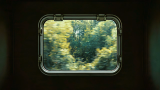 @1
@1 @2
@2 @3
@3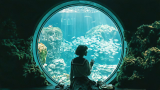 @4
@4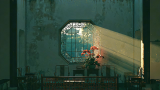 @5
@5Tips
Seedance 2.5 is built for shots with a clear goal and many moving parts: preserve a person or product, direct motion and space, set the visual language, and shape sound together. Up to 30 seconds and 4K output leave room for a complete idea and a delivery-ready frame.
Story space
Up to 30 seconds
Give a shot time to establish, change, and land instead of compressing the whole idea into a brief demonstration.
Delivery ceiling
Up to 4K
Keep more detail for materials, lighting, safe-area crops, and the finishing work that happens after generation.
Control method
Multimodal direction
Use images for identity and style, video for movement, audio for rhythm, and @ mentions to make each relationship explicit.
Seedance 2.5 works best when you decide what viewers should notice and feel before choosing the references that direct the result.
Direct reflections, texture, lighting, and camera distance around a product reference so the surface quality carries the shot.
Anchor appearance with a strong reference, then describe the expression, body movement, and camera response that should change.
Preserve the central composition of a campaign image while adding depth, atmosphere, reveals, and a deliberate ending frame.
Use an audio cue to time a reveal, gesture, lighting change, or edit point so motion and sound reach the beat together.
Explore a push, orbit, follow, or spatial transition before production and see whether the subject remains readable throughout the path.
Plan the subject position and safe areas for product pages, ads, and social crops while keeping the creative idea recognizable.
A strong result begins with decisions the model can act on. Give every reference a job, describe what must change over time, and judge the output against the place it will be published.
Start with one communication goal: product texture, character emotion, a reveal, or a camera move. Let every other detail support that priority so the shot does not compete with itself.
Use one source for identity or product shape, another for visual tone, and video or audio only when motion or rhythm needs guidance. Mention each asset where its role becomes relevant.
Describe what triggers the action, how the camera responds, and where the scene settles. This creates a more useful 30-second arc than a list of disconnected visual adjectives.
Judge framing, safe areas, legibility, continuity, and sound against the intended ad, product page, or social format. Revise the conflicting instruction instead of rewriting the whole prompt.
More control does not always require more files. Begin with the lightest input that expresses the core idea, then add references only when they solve a specific uncertainty.
A direct creation workflow inspired by the next Seedance generation, grounded in the capabilities currently available in this workspace.
Start from a written scene or guide the result with visual and audio materials. Use @1, @2, and other references in the prompt to connect subjects, style, motion, camera direction, and sound.
Use higher-resolution output for product detail, cinematic framing, launch pages, ads, and premium social cuts.
Generate a longer single clip with room for setup, camera movement, action, and a clean ending beat.
Generate synchronized sound and choose a generation channel that fits standard scenes, real-person references, or a broader creative range.
Go from an idea to a downloadable AI video in three steps.
Write the subject, action, setting, mood, camera movement, and sound you want. For a longer scene, describe the beginning, development, and ending in order.
Upload the most important images, video, or audio, insert @ references into the prompt, then choose duration, resolution, aspect ratio, audio, and a generation channel.
Check the displayed credit cost, generate the video, and preview the result. Download it or continue from the last frame or source video to build the next scene.
Current answers about direct generation, reference limits, 4K output, 30-second availability, and credits.
Use our AI image prompt gallery to design scenes and characters, then bring them to life with Seedance 2.5.
Browse AI image prompts →